As the owner of The Grout Medic for more than 14 years, I’m often asked why we don’t use epoxy grout in shower corners instead of caulk. Since epoxy is marketed as stronger, more water-resistant, and more mold-resistant than traditional grout or caulk, it’s easy to assume it would be the better option in a wet area like a shower.
The reality is simple: epoxy grout is not designed for movement joints, and using it in those areas goes against established tile industry standards.
For homeowners researching tile and grout solutions, understanding the difference between rigid and flexible materials is critical to protecting your investment and avoiding costly repairs.
What the Tile Industry Standards Say
The tile industry follows guidelines established by the Tile Council of North America (TCNA) and the American National Standards Institute (ANSI).
These standards are clear:
Movement joints must be free of grout and filled with a flexible sealant.
According to TCNA detail EJ171, movement joints are required wherever tile changes plane, including:
- Wall-to-wall corners
- Wall-to-floor transitions
- Wall-to-ceiling joints
Because epoxy cures into a rigid material, it does not meet these requirements.
At The Grout Medic, we follow industry best practices when performing regrouting services, recaulking services, and complete tile and grout restoration.
Why Movement Joints Matter
Homes are constantly moving.
Behind your tile is wood framing that expands and contracts with changes in moisture and temperature. Hot showers increase humidity, causing materials to swell. As those materials dry out, they contract.
Exterior walls, benches, niches, and other structural features often experience even more movement due to temperature fluctuations and additional framing components.
These shifts create stress where tiled surfaces meet. Tile and grout are hard materials that cannot absorb movement, which is why these areas require a flexible material rather than a rigid one.
When we perform grout restoration and tile repair projects, movement-related failures are among the most common issues we encounter.
Why Epoxy Grout Fails in Shower Corners
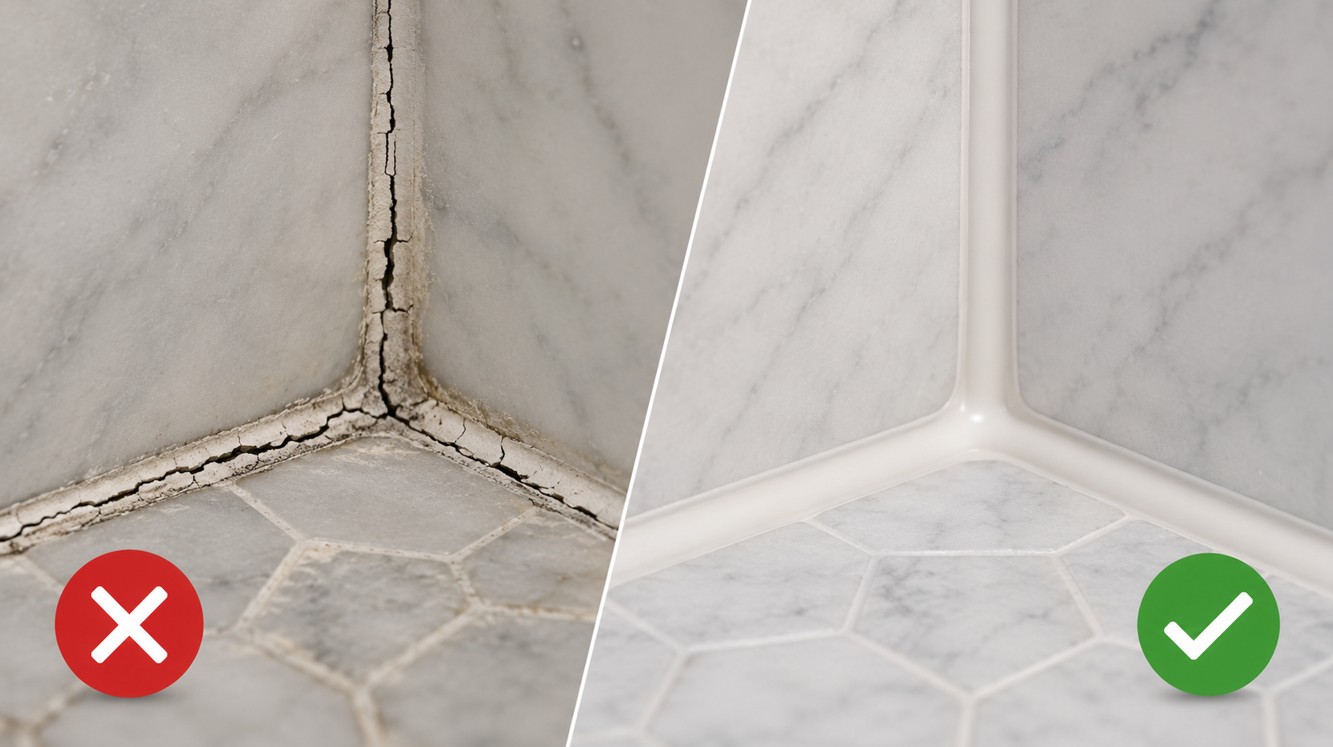
Epoxy grout is dense, durable, and water-resistant, but it is not flexible. Once cured, it effectively locks adjacent surfaces together.
When normal building movement occurs, the stress has nowhere to go. The result is predictable:
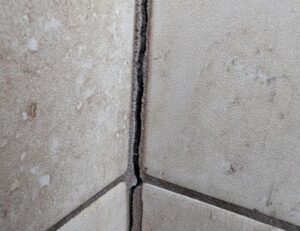
- Cracking at corners
- Loss of bond (debonding)
- Stress transferring into surrounding tile
More importantly, once epoxy cracks or separates, the joint is no longer sealed. This creates a pathway for water to migrate behind the tile assembly.
Over time, hidden moisture can damage wall materials and create conditions that encourage mold growth behind the walls. Because this often happens out of sight, homeowners may not discover the problem until repairs become extensive and expensive.
A flexible sealant such as 100% silicone is specifically designed to absorb movement while maintaining a watertight seal.
Water Intrusion Can Lead to Larger Problems
When moisture gets behind tile surfaces, the damage isn’t always immediately visible.
What begins as a small failure in a shower corner can eventually contribute to larger restoration needs, including:
- Damaged backing materials
- Loose or cracked tile
- Grout deterioration
- Moisture-related structural issues
In severe cases, homeowners may require water damage repair services in addition to grout and tile restoration.
Preventing these issues starts with using the proper materials in the proper locations.
Mold Concerns Don’t Change the Answer
Many homeowners consider epoxy grout because they believe it will eliminate mold concerns.
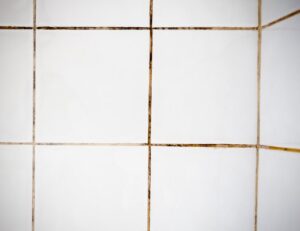
However, mold is primarily an environmental issue rather than a material issue.
Mold grows on organic residue such as:
- Soap scum
- Body oils
- Mineral deposits
- Dirt buildup
These substances can accumulate on both epoxy grout and silicone sealants.
Moisture, frequent shower use, and inadequate ventilation are usually the driving factors behind mold growth. No grout or sealant product is permanently mold-proof.
Proper cleaning, ventilation, and maintenance remain essential regardless of the materials used.
For homeowners looking to extend the life of their tile surfaces, professional steam cleaning services and periodic maintenance can help keep showers cleaner and healthier.
Serviceability Matters
Another important consideration is future maintenance.
Silicone Is Easier to Replace
When silicone eventually wears out, it can generally be removed and replaced without major disruption.
Epoxy Repairs Are More Difficult
Epoxy grout is extremely difficult to remove and often requires grinding or specialized tools.
When epoxy fails in a movement joint, the repair process is typically far more invasive, time-consuming, and expensive.
This is one reason why professional restoration specialists continue to recommend flexible sealants in change-of-plane applications.
You can learn more about our restoration process and approach on our Why Choose Us page and by reviewing feedback from our customer reviews.
Why The Grout Medic Follows Industry Standards
At The Grout Medic, our goal is not simply to make a shower look good today. We want it to perform properly for years to come.
Whether we’re providing recaulking services, grout cleaning, color sealing, or complete tile restoration, we follow proven industry standards designed to maximize durability and long-term performance.
Using the right product in the right application helps prevent avoidable failures and protects your investment.
If you’re experiencing cracked corners, failing caulk, or grout-related issues, contact The Grout Medic through our contact page to schedule an evaluation.
TL;DR / Key Takeaways
- Epoxy grout is not approved for movement joints or changes of plane.
- TCNA and ANSI standards require flexible sealants in shower corners and transitions.
- Homes naturally expand and contract, creating movement that rigid epoxy cannot accommodate.
- Cracked epoxy joints can allow water intrusion behind tile surfaces.
- Mold growth is primarily caused by moisture and residue, not by the grout material itself.
- Silicone sealants are designed to flex, maintain a watertight seal, and are easier to service when replacement is needed.
- At The Grout Medic, we follow established industry standards to help ensure long-lasting tile and grout performance.